
By Beechwood Home Buyers
Family-first Investment Company
Mobile: (860) 909-8608
e: info@BeechwoodHomeBuyers.com
July 23, 2025
Selling a house “as is” can be a smart move for property owners who
want to avoid costly repairs and speed up their sale, as well as for
real estate professionals guiding clients through this unique process.
But how can you navigate the potential pitfalls and maximize your
return? This comprehensive guide breaks down essential steps, legal
requirements, strategies, and common mistakes—ensuring your “as is”
sale is a success.
What Does “Selling As Is” Really Mean?
Selling a house “as is” means offering it in its current condition,
with the understanding that the seller will not make any repairs or
improvements before closing. Buyers are explicitly informed that what
they see is what they get—both the good and the bad.
While this approach can accelerate the sales process, it requires
transparency and careful handling to avoid legal issues and achieve
the best possible price.
Why Sell a House As Is?
There are several reasons property owners choose to sell as is:
Avoid Repair Costs: Older homes or those with deferred
maintenance may require significant investment. Selling as is
transfers that responsibility to the buyer.
Need for a Fast Sale: Life events—like relocation, inheritance,
or financial hardship—may require a swift transaction.
Investor Interest: Properties with upside potential often
attract investors willing to purchase as is and renovate themselves.
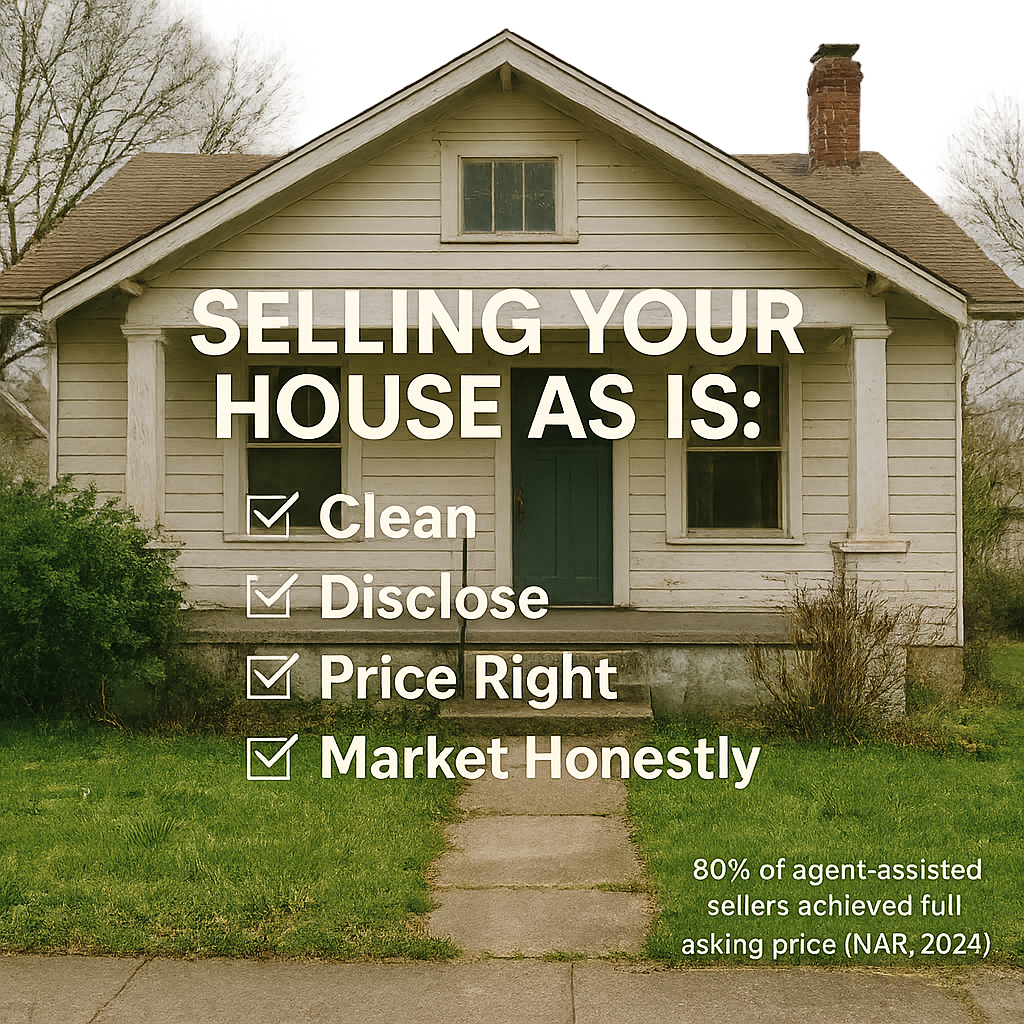
According to the National Association of REALTORS®’ 2024 statistics,
most agent-assisted home sales achieved 100% of listing price, while
FSBO sellers, who commonly sell as is, secured slightly less. A key to
success: setting expectations and managing the process wisely ([NAR,
2024](https://www.nar.realtor/research-and-statistics/quick-real-estate-statistics)).
Legal Considerations and Disclosures
Even though you’re selling “as is,” you are not off the hook for legal
disclosures. Sellers are typically required by state law to disclose
known material defects that could impact the property’s value or
desirability. Failing to do so can result in buyer withdrawal or legal
action down the line.
Key disclosure steps include:
Complete All Required Forms: Each state has its own disclosure
forms. For example, Ohio requires sellers to fill out a thorough
disclosure form covering structural, mechanical, and environmental
features ([Houzeo,
2024](https://www.houzeo.com/blog/selling-a-house-as-is-in-ohio/)).
Be Honest About Defects: Even if you’re not making repairs, you
must tell buyers about any known problems—such as a leaky roof,
foundation issues, or outdated electrical systems.
Document Communication: Put “as is” language in your listing,
marketing materials, and purchase agreement.
Tip: Consider a Pre-Sale Home Inspection
A pre-sale inspection can help you identify all issues upfront,
increasing transparency and minimizing the risk of last-minute
negotiations or lawsuits. Many buyers and their agents will appreciate
this move—and it can help you stand out in a competitive market.
Pricing Your As Is Property: Finding the Sweet Spot
One of the most common errors in as is sales is mispricing. Setting
the right price is crucial, as most buyers expect a discount for
taking on repair risks and possible hidden issues.
Best practices for pricing:
Get a Comparative Market Analysis (CMA): Work with a real estate
agent familiar with as is properties to analyze comparable sales in
your neighborhood.
Factor in Repair Costs: Deduct estimated repair expenses from
recent comparable sales. This gives buyers confidence that the price
reflects the property’s true condition.
Be Realistic: According to Investopedia, emotional attachment or
unrealistic expectations can lead to overpricing and a stagnant
listing ([Investopedia,
2023](https://www.investopedia.com/articles/mortgages-real-estate/08/home-seller-mistakes-selling-house.asp)).
Pro Tip: Homes that are too highly priced tend to linger on the
market, leading to eventual price reductions and a negative buyer
perception.
How to Present Your Home For Top Dollar
You can’t change the structure, but you can still make a powerful
first impression:
Clean and Declutter: A tidy home looks more appealing, even if
it needs repairs. Clean floors, clear countertops, mow the lawn, and
remove excess personal items—this simple step consistently produces a
higher perceived value.
Maintain Curb Appeal: Trim bushes, weed flower beds, and ensure
the exterior is presentable. Buyers make judgments the moment they
arrive.
Brighten Up: Open curtains, replace burnt-out bulbs, and ensure
each room feels as spacious and welcoming as possible.
As Bankrate puts it, looking “dated” is acceptable, but looking
“derelict” will scare off even bargain hunters ([Bankrate,
2024](https://www.bankrate.com/real-estate/selling-your-house-as-is/)).
Marketing an As Is Sale: Honesty Attracts
The best results come from targeting the right buyers—typically
investors, flippers, or value-seekers—and being upfront about your
property’s as is status.
Highlight Potential: Use listing language that talks about
“investor opportunity,” “fixer-upper,” or “priced to sell.”
Photography Matters: Use professional, unfiltered photos that
accurately depict the property. Include images of both the strengths
and weaknesses to build trust.
Use Multiple Channels: MLS listings, investor networks, social
media, and open houses all have a place. In 2024, many successful
sellers used online platforms and social media to reach motivated
buyers quickly ([NAR,
2024](https://www.nar.realtor/research-and-statistics/quick-real-estate-statistics)).
Featuring Real People and Homes
Including authentic images of your property—and, if appropriate, of
people enjoying the space—can help potential buyers imagine the
lifestyle and value they can create after renovations.
Common Mistakes to Avoid
1. Hiding Major Problems: Full disclosure avoids litigation and
builds buyer trust. Never try to “patch and hide” serious defects.
2. Overpricing: Realistic pricing attracts serious buyers and
prevents costly delays.
3. Neglecting Cleanliness: A dirty or cluttered home lowers
perceived value, even if “as is.”
4. Poor Marketing: Don’t hide the fact that you’re selling as
is—transparency attracts buyers who are prepared for what’s involved.
5. Skipping Professional Advice: An experienced real estate agent
adds value, particularly regarding pricing, negotiation, and legal
requirements.
Tax and Financial Implications
Before selling, consider potential tax consequences—especially capital
gains tax. In the U.S., you may qualify for primary residence
exemptions if you’ve lived in the home for two of the last five years
([IRS Publication 523, 2024](https://www.irs.gov/publications/p523)).
Consult with a tax professional for personalized advice.
Real-World Success: Case Study
In the 2024 market, most agent-assisted sellers (90%) secured their
full asking price. FSBOs (for sale by owner), which often include as
is sellers, accounted for just 6% of sales and achieved lower average
sales prices than agent-assisted transactions. The biggest FSBO
challenges? Pricing the home correctly, time management, and preparing
the property for sale.
Investors and buyers ready for renovation projects appreciated clear,
unfiltered listings with honest disclosures and realistic pricing
([NAR, 2024](https://www.nar.realtor/research-and-statistics/quick-real-estate-statistics)).
—
Checklist: How to Sell Your House As Is—Step by Step
1. Assess Your Home’s True Condition
– Optional: Invest in a pre-sale inspection
2. Gather Legal Documents and Complete Disclosures
– Fill out all required forms with honesty and transparency
3. Set the Right Listing Price
– Get a CMA and subtract realistic repair costs
4. Stage for Success
– Clean, declutter, and maintain curb appeal
5. Market Aggressively and Accurately
– Use “as is” language
– Share real, authentic images
– Target the right buyers
6. Negotiate with Confidence
– Prepare for offers that may request credits or reductions, but
set boundaries
7. Close Smoothly
– Lean on professional support for paperwork, contracts, and closing details
Resources and Further Reading
– [Bankrate: Selling Your House As
Is](https://www.bankrate.com/real-estate/selling-your-house-as-is/)
– [IRS Publication 523: Selling Your
Home](https://www.irs.gov/publications/p523)
– [National Association of REALTORS®: Quick Real Estate
Statistics](https://www.nar.realtor/research-and-statistics/quick-real-estate-statistics)
– [Houzeo: Selling a House As Is in
Ohio](https://www.houzeo.com/blog/selling-a-house-as-is-in-ohio/)
– [Investopedia: Home Selling
Mistakes](https://www.investopedia.com/articles/mortgages-real-estate/08/home-seller-mistakes-selling-house.asp)
Conclusion: Opportunity Awaits
Selling a house as is can be a profitable and efficient strategy when
executed with transparency, realistic expectations, and strong
marketing. For real estate professionals, guiding clients through this
process with clear communication and data-driven advice is a hallmark
of valuable service.
Are you ready to sell your property as is? Consider partnering with a
local expert or trusted real estate professional to ensure your sale
proceeds smoothly—and profitably.
For professional guidance or a free home evaluation, contact your
local real estate expert today. Your smooth, honest, and successful as
is sale starts here!
#RealEstate #HomeSelling #AsIsHomes #PropertyOwners #RealtorTips